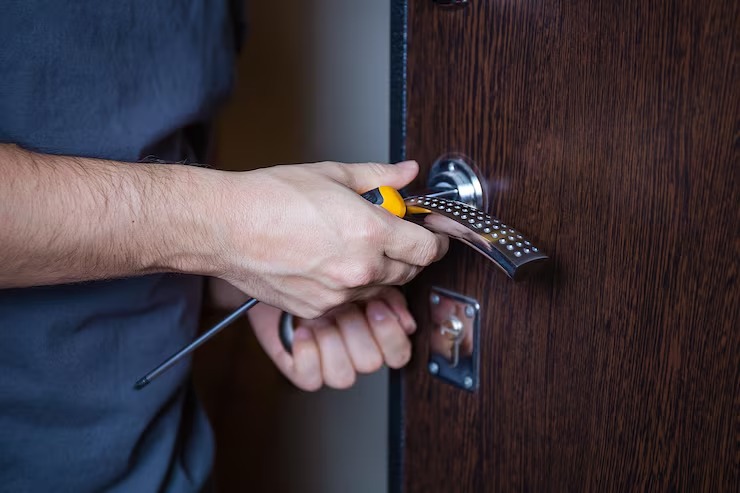
A broken key inside your door lock can disrupt your day, leave you unable to enter your home, or prevent you from securing your property. Although you might be tempted to pull out the fragment yourself, the wrong approach can push it deeper into the lock or damage its internal components. Knowing when to stop and call a professional helps you avoid unnecessary repairs.
If you live in the Denver metro area, understanding when professional extraction is necessary can help you make a safer, more cost-effective decision. APEX Locksmith Denver provides mobile locksmith services, including broken key extraction, to help restore access while protecting your existing lock whenever possible.
Why Do Keys Break Inside Door Locks?
Keys rarely snap without a reason. In many cases, a broken key indicates wear, resistance inside the lock, or excessive pressure during operation.
Common causes include:
- Worn or weakened keys: Repeated use gradually wears down metal, while previous bending or damage can make a key more likely to snap.
- Stiff lock mechanisms: Dirt, corrosion, or worn internal components can prevent the key from turning smoothly.
- Misaligned doors: A door that has shifted in its frame may place pressure on the locking mechanism.
- Excessive force: Forcing a key that will not turn can cause even a relatively strong key to break.
- Incorrect keys: A poorly cut duplicate or the wrong key can bind inside the cylinder.
If you regularly struggle to turn your key, address the problem before the key breaks completely.
When Does a Broken Key Require Professional Extraction?
Not every broken key requires immediate lock replacement. However, professional assistance becomes important when the fragment is lodged deep inside the cylinder, sits flush with the keyway, or cannot be removed without force.
You should contact a locksmith when:
- The broken piece is no longer accessible with a safe, gentle removal attempt.
- The lock is jammed, and the fragment prevents the cylinder from turning.
- You have tried removing the key and suspect it has moved deeper.
- The lock belongs to a high-security system or has delicate internal components.
- You cannot secure your home because the damaged lock will not operate.
- The key broke after repeated sticking, suggesting an underlying mechanical problem.
A qualified Denver locksmith for lock repair and key extraction can inspect the cylinder, determine how the fragment is positioned, and select an appropriate extraction method.
What Should You Do Immediately After a Key Breaks?
Your first priority is to avoid making the situation worse. Follow these practical steps before seeking assistance.
- Stop turning the lock. If the key snaps while you are turning it, release pressure immediately. Continued twisting can wedge the fragment more tightly into the cylinder.
- Avoid pushing the fragment inward. Do not insert another key or an improvised tool behind the broken piece. This may move it beyond the reach of an extractor.
- Skip household adhesives. Glue can spread into the keyway and bond moving components together, potentially turning a simple extraction into a more expensive repair.
- Do not force the door. Pulling, kicking, or pushing a jammed door can damage the frame, strike plate, or locking hardware.
- Assess your immediate security. If the door cannot be locked, avoid leaving the property unsecured. Consider using another secure entrance while arranging professional help.
If the fragment protrudes slightly, resist the urge to grip it tightly with pliers. Crushing or twisting the exposed metal may make removal harder.
How Does Professional Broken Key Extraction Work?
Professional extraction begins with an inspection rather than an automatic lock replacement. The locksmith evaluates the lock type, the fragment’s position, the cylinder’s condition, and whether the mechanism is under pressure.
Depending on the situation, the technician may use a specialized key extractor to engage the broken piece and withdraw it carefully. The lock may need to be positioned correctly before extraction, particularly if the fragment is trapped inside a turned cylinder.
After removing the fragment, the locksmith checks whether the cylinder operates smoothly and whether internal components have been damaged. If the lock remains functional, you may only need a replacement key. If worn pins, damaged components, or other mechanical problems are responsible, repair or replacement may be more appropriate.
APEX Locksmith Denver lists broken key extraction among its locksmith services. You can review its professional locksmith services in Denver to understand the available assistance for residential, commercial, and automotive lock problems.
Should You Repair or Replace the Lock After Extraction?
The right decision depends on the condition of your lock, not simply on the fact that the key broke.
Extraction and continued use: If the cylinder is undamaged and operates normally after removal, you may be able to keep the existing lock and obtain a properly cut replacement key.
Lock repair: If the key broke because of internal wear, sticking components, or minor mechanical damage, repairing the affected parts may restore reliable operation.
Lock replacement: If the cylinder is severely damaged, the lock repeatedly jams, or the hardware no longer provides dependable security, replacing it may be the better long-term choice.
A locksmith should explain the findings and available options before proceeding. Ask whether extraction alone is sufficient, whether a new key is needed, and whether any recommended replacement is necessary for safety or reliability.
How Can You Prevent Another Broken Key?
Preventive maintenance can reduce the likelihood of another unexpected break.
- Replace keys that are bent, cracked, visibly worn, or difficult to insert.
- Never force a key that resists turning.
- Keep locks clean and follow the manufacturer’s maintenance recommendations.
- Use a lubricant specifically suitable for your lock; avoid unsuitable household oils that may attract dirt.
- Check whether the door closes and aligns properly with its frame.
- Arrange an inspection if the lock repeatedly sticks, grinds, or requires unusual pressure.
If you have recently moved, consider reviewing your home’s overall security as well. A locksmith can assess worn hardware and discuss whether rekeying or a security upgrade is appropriate.
Get Professional Broken Key Extraction in Denver
A broken key does not automatically mean you need an entirely new lock. Prompt, careful extraction can often preserve functioning hardware and help you regain access without unnecessary damage.
APEX Locksmith Denver offers mobile locksmith services throughout Denver and the surrounding metro area. If a key has snapped inside your door lock, contact the team to describe the problem, confirm service availability, and request a quote before work begins. Explain whether the fragment is visible, whether the door is locked, and whether the lock was sticking before the key broke.
Choosing an experienced Locksmith Denver service can help you identify the cause, understand your options, and restore dependable access to your property.