Moisture can compromise sensitive laboratory samples, affect material stability, and reduce the reliability of experimental results. If you store hygroscopic chemicals, reference materials, electronic components, or moisture-sensitive specimens, you need a dependable way to monitor humidity inside your desiccator. Regular checks help you identify moisture intrusion early, maintain suitable storage conditions, and protect valuable laboratory materials.
Monitoring moisture protection involves more than checking the desiccant occasionally. You must understand your required humidity level, inspect the chamber seal, track desiccant performance, and maintain consistent storage practices. By following a structured routine, you can improve sample protection and reduce avoidable storage problems.
Establish Your Required Moisture Level
Before monitoring your desiccator, determine how dry your stored materials need to remain. Different samples have different moisture sensitivities, so one humidity target will not suit every application.
Start by reviewing your sample specifications, laboratory procedures, and manufacturer recommendations. Some materials tolerate moderate humidity, while others require very dry conditions to prevent degradation, clumping, corrosion, or changes in chemical properties.
Once you understand the requirements, establish an acceptable relative humidity range. Use this range as your reference when checking the desiccator.
A digital hygrometer or compatible humidity sensor can help you track internal relative humidity. For applications requiring tighter control, choose a calibrated instrument with suitable accuracy and a measurement range appropriate for your target conditions.
Record the initial humidity reading after the chamber reaches stable conditions. This baseline helps you identify future changes and determine whether your moisture-control system is performing as expected.
Inspect the Desiccator Seal for Moisture Intrusion
Even an effective desiccant cannot maintain dry conditions if humid air continually enters the chamber. A damaged lid, worn gasket, contaminated sealing surface, or improperly closed door can reduce moisture protection.
Inspect the sealing components regularly. Look for cracks, deformation, residue, dust, and other damage that could prevent a tight closure. Clean the sealing surfaces according to the manufacturer’s instructions before closing the chamber.
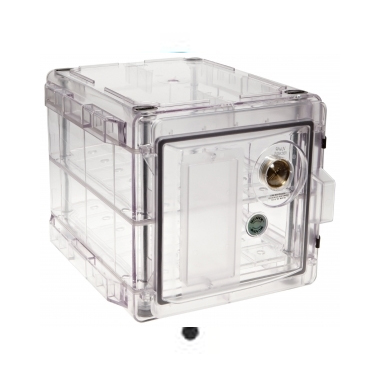
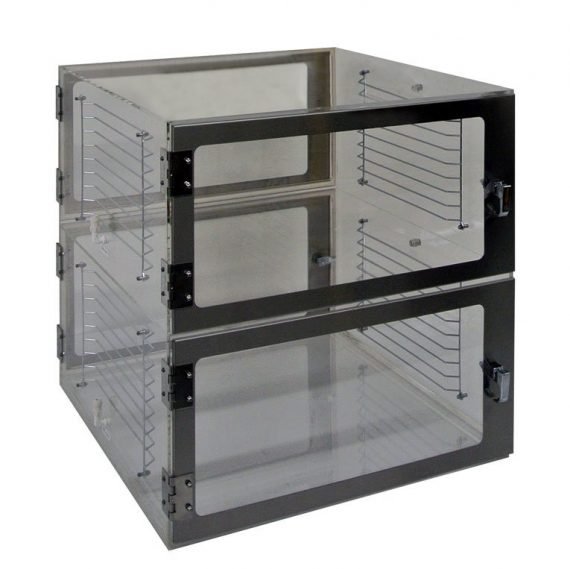
For cabinet-style desiccators, check door gaskets, hinges, latches, and any designated access points. Confirm that doors close evenly and that the sealing components remain in good condition.
You should also pay attention to changes in humidity after opening the chamber. A temporary increase may occur when humid room air enters. However, humidity that remains elevated after the chamber has been closed and allowed to stabilize could indicate exhausted desiccant, excessive sample moisture, or a sealing problem.
Never rely on visual inspection alone. Compare humidity readings over time to determine whether the enclosure maintains the conditions your samples require.
Monitor Desiccant Performance Consistently
The desiccant absorbs moisture from the enclosed air, helping maintain a dry storage environment. However, its moisture-absorbing capacity is limited. Once the material approaches saturation, its ability to control humidity decreases.
Inspect your desiccant according to its type and manufacturer guidance. Color-indicating silica gel may provide a visual warning when it requires replacement or regeneration, but not all desiccants change color. Never assume that appearance alone confirms remaining capacity.
Use these practical monitoring steps:
- Check humidity readings at consistent intervals.
- Inspect indicator-based desiccants for the specified color change.
- Record the date of desiccant replacement or regeneration.
- Follow approved regeneration temperatures and procedures.
- Replace desiccant that is contaminated, damaged, or no longer effective.
Avoid regenerating desiccants unless the material is specifically designed for reuse and you can follow the required safety instructions.
For reliable moisture management, choose a laboratory desiccator for controlled storage of moisture-sensitive samples that suits your storage volume, monitoring requirements, and application. The appropriate equipment makes it easier to maintain consistent conditions and protect laboratory materials.
Maintain a Moisture Monitoring Log
A written monitoring record helps you distinguish normal humidity fluctuations from developing problems. Without historical data, it can be difficult to determine whether moisture protection is stable or gradually deteriorating.
Create a log that includes the date, time, internal relative humidity, ambient conditions when relevant, desiccant status, and any maintenance performed. Record when the chamber is opened for frequent sample handling if this activity could influence humidity.
For example, you might notice that internal humidity increases after every access event but returns to its normal range within a predictable period. If recovery becomes slower, you can investigate the desiccant condition, chamber seal, and storage practices.
Set monitoring frequency according to the sensitivity of your samples and the risk associated with moisture exposure. High-value or highly moisture-sensitive materials may require more frequent checks or continuous monitoring.
If your laboratory uses electronic sensors, review their calibration status and confirm that readings remain within the instrument’s specified accuracy. Keep records accessible so your team can identify trends and demonstrate compliance with internal procedures.
Improve Storage Practices and Correct Problems Early
Your daily handling practices directly affect moisture protection. Every time you open a desiccator, humid air can enter and increase the moisture load.
Prepare the samples and tools you need before opening the chamber. Retrieve materials efficiently, close the enclosure promptly, and ensure the seal is properly engaged. Avoid placing wet, warm, or inadequately dried items inside unless the storage procedure specifically allows it.
Do not overload the chamber. Excessive sample quantities can restrict airflow around stored materials, complicate handling, and increase the moisture load if samples release water vapor.
If humidity rises above your established limit, take a systematic approach:
- Confirm the reading and check the sensor’s condition.
- Inspect the lid, gasket, doors, and access points.
- Evaluate whether the desiccant needs replacement or regeneration.
- Reduce unnecessary opening and verify that stored materials are suitable for the chamber.
- Recheck humidity after corrective action and document the outcome.
If conditions do not recover, transfer sensitive samples to an appropriate alternative storage environment while investigating the cause. Do not assume that closing the chamber alone will restore protection.
For equipment selection, storage guidance, and laboratory supply options, visit Global Lab Supply for laboratory moisture-control and storage equipment.
If you need help identifying a suitable solution for your application, contact our team for laboratory desiccator assistance.
Frequently Asked Questions
1. How often should you check humidity in a laboratory desiccator?
Check humidity according to your sample sensitivity, laboratory procedures, and risk level. Daily or more frequent checks may be appropriate for critical materials, while less sensitive applications may need periodic inspections. Continuous monitoring can help when humidity excursions pose significant risks.
2. What is the ideal humidity level inside a laboratory desiccator?
There is no universal target. The appropriate relative humidity depends on your samples, desiccant, enclosure design, and experimental requirements. Establish a target using sample specifications and validated laboratory procedures, then monitor readings against that range.
3. How can you tell when desiccant needs replacement?
Look for manufacturer-specified indicator changes, declining moisture-control performance, or humidity readings that remain above your acceptable range. Some desiccants have no visual indicator, so follow the product’s replacement schedule and performance guidance.
4. Why does humidity increase after closing a desiccator?
Possible causes include humid air entering during access, exhausted desiccant, moisture released by stored materials, or a defective seal. Allow appropriate stabilization time, verify the sensor, and inspect these potential causes before deciding on corrective action.
5. Can you use a hygrometer to monitor a laboratory desiccator?
Yes. A suitable digital hygrometer or humidity sensor can measure internal relative humidity. Select an instrument with appropriate accuracy and range, verify its calibration, and position it according to the manufacturer’s instructions.
Conclusion
Reliable moisture protection depends on consistent measurement, effective sealing, suitable desiccant management, and disciplined sample handling. When you establish a humidity target, maintain monitoring records, and investigate abnormal readings promptly, you can reduce moisture-related risks and improve storage reliability.
Choose equipment that meets your laboratory’s specific requirements, follow the manufacturer’s instructions, and review your monitoring procedure whenever your samples or storage conditions change. A proactive approach helps you maintain a dependable environment for moisture-sensitive laboratory materials.